Nepal's Real Estate Landscape in 2026
For generations, Nepali households have followed one golden rule: buy land. From the Terai plains to the hills of Kathmandu, property has been seen as a hedge against inflation, a family legacy, and the surest way to grow wealth. But 2026 looks different from 2016 or even 2020.
A combination of tightened bank lending, a sluggish post-earthquake recovery in certain regions, and a younger generation looking toward stocks, startups, and digital assets has created real pressure on the real estate market. The question is no longer just "should I buy property?" — it's "does real estate still make strategic sense compared to what else is out there?"
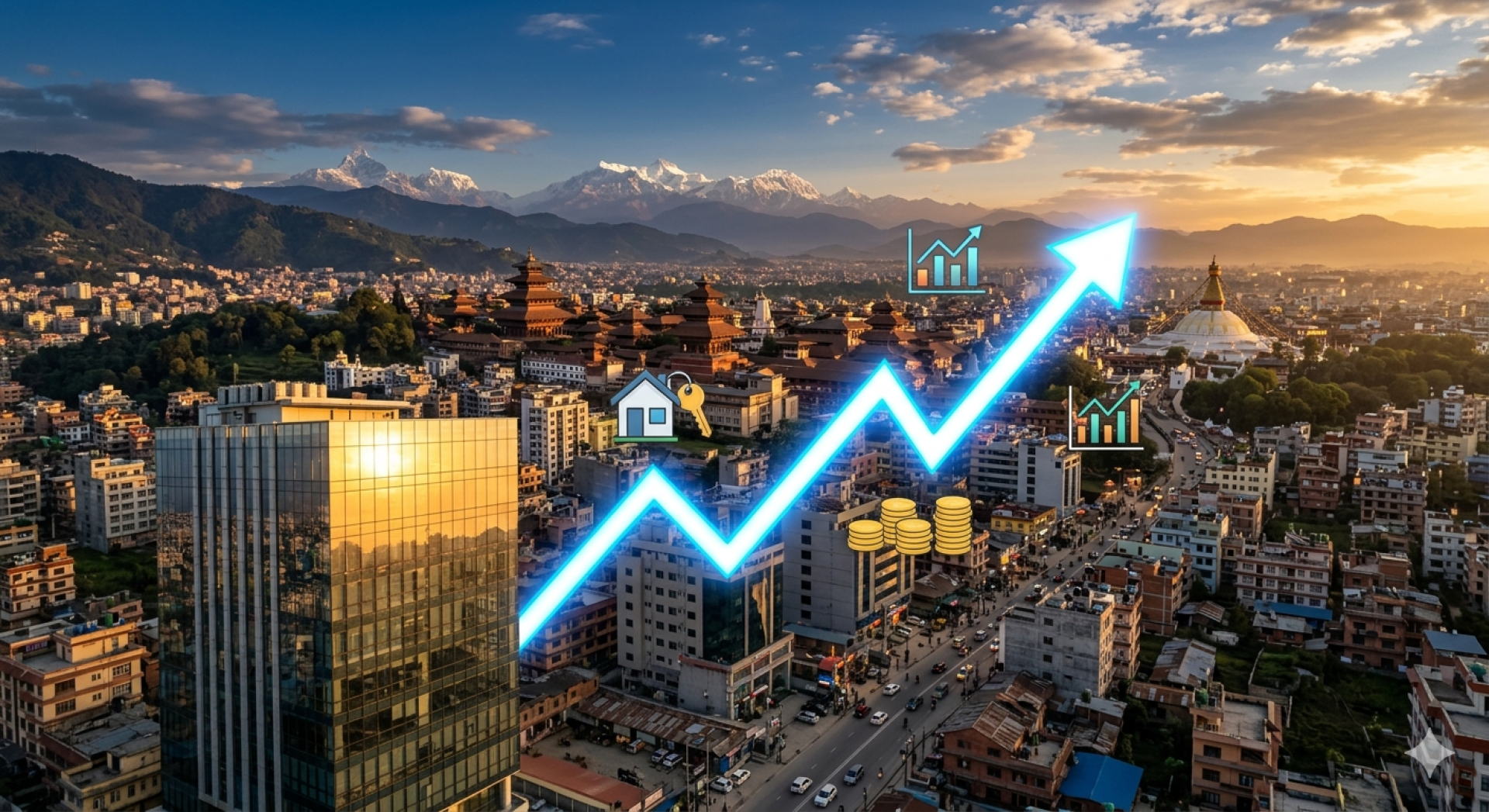
Nepal's real estate market has historically appreciated at an average of 8–12% annually in urban centers. However, the 2024–2026 cycle has seen that figure moderate to 4–7% in most Kathmandu valley areas due to liquidity constraints and oversupply in mid-tier housing.
This article breaks down the current state of real estate investment in Nepal, compares it with emerging alternatives, and gives you a clear-eyed view of what the data says — so you can make smarter decisions with your money.
2026 Market Data & Key Trends
Understanding the macroeconomic backdrop is essential before making any property decision. Here's what the numbers are telling us:
Credit Squeeze & Interest Rates
Nepal Rastra Bank's monetary tightening since 2023 pushed home loan interest rates to the 16–19% band by mid-2026. This has directly suppressed buyer demand, particularly among first-time homebuyers and young professionals who relied on affordable credit to enter the market. Fewer buyers means slower capital appreciation.
Oversupply in Mid-Tier Housing
The Bhaktapur–Lalitpur corridor and peri-urban Kathmandu have seen a notable oversupply of apartments and housing colonies priced between NPR 80 lakhs and NPR 1.5 crore. With absorption rates down, sellers are holding longer and negotiating more — a buyer's market in that segment.
Prime Land Remains Resilient
Core areas — Lazimpat, Baluwatar, Maharajgunj, Baneshwor — continue to see strong demand from embassies, NGOs, and premium commercial users. Prime aana prices here have held firm or even appreciated. The story is very different depending on location.
Don't conflate "real estate is safe" with "all real estate is safe." Location, liquidity, and holding period are the three variables that determine whether a property investment performs well or traps capital.
Rental Yields: Thin but Steady
Rental income in Nepal, while stable, offers relatively thin gross yields — typically 2.5% to 4.5% annually in Kathmandu. After factoring in maintenance, property tax, and vacancy periods, net yields can be even lower. Compare this to fixed deposits offering 7–9% with zero management overhead, and the rental income story alone doesn't make a compelling case.
Pros & Cons of Real Estate in Nepal in 2026
Let's lay it out plainly:
✅ Advantages
- Tangible, physical asset — hard to lose entirely
- Long-term capital appreciation in prime areas
- Hedge against currency devaluation
- Rental income stream (passive)
- Collateral value for future credit
- Cultural and family security value
❌ Disadvantages
- Very illiquid — can take months or years to exit
- High transaction costs (registration, stamp duty)
- Thin rental yields vs. alternatives
- Regulatory risk & zoning changes
- Credit expensive — high home loan rates
- Requires active management if renting
Real Estate vs. Other Investment Options
A responsible answer to "is real estate the best investment?" requires comparing it against what else is available to a Nepali investor in 2026.
| Investment Type | Expected Returns | Liquidity | Risk Level | Min. Entry |
|---|---|---|---|---|
| Real Estate (Prime) | 6–10% p.a. | Low | Medium | NPR 50L+ |
| NEPSE Stocks | 10–20% (variable) | High | High | NPR 1,000+ |
| Fixed Deposits | 7–9% p.a. | Medium | Low | NPR 10,000+ |
| Mutual Funds | 8–14% p.a. | High | Medium | NPR 100+ |
| Gold | 5–12% p.a. | High | Medium | NPR 5,000+ |
| Startups / Business | Variable (0–100%+) | Very Low | Very High | Variable |
The table reveals a nuanced picture. Real estate is neither the highest-returning nor the most liquid option. What it does offer is a compelling combination of moderate returns, inflation hedging, and collateral value — a profile that still makes sense in a balanced portfolio.
City-Wise Breakdown: Where Does Real Estate Still Make Sense?
🏙️ Kathmandu Valley
Still the epicenter of Nepal's real estate market. Core areas remain expensive and slow-moving, but stable. Satellite towns like Budhanilkantha, Tarkeshwor, and Tokha offer better value-to-price ratios and are seeing infrastructure improvements that will drive appreciation over the next 5–7 years.
🌿 Pokhara
The international airport has been a game-changer. Tourism-linked commercial real estate — guesthouses, boutique hotels, short-term rentals — can generate 6–8% yields. Residential in the Lakeside and Bagar areas has appreciated well. Watch the lakefront zoning regulations carefully, though.
🌾 Terai Corridor (Birgunj, Butwal, Bhairahawa)
Industrial and commercial property near the Indian border has been one of the quieter success stories. Proximity to trade routes, SEZs, and cross-border commerce drives commercial demand. Residential lags, but industrial land has seen steady appreciation.
🏔️ Emerging Hill Towns
Dharan, Biratnagar, and Hetauda are growing faster than most investors realize. Lower land prices with improving connectivity make these cities worth watching for early movers.
Emerging Investment Alternatives Nepali Investors Are Exploring
A new generation of Nepali investors — many of them developers, IT professionals, and diaspora returnees — are looking beyond land. Here are the alternatives gaining traction:
- NEPSE & Mutual Funds: The Nepal Stock Exchange has deepened significantly. Mutual funds allow diversified exposure with as little as NPR 100. For the liquidity-conscious investor, this is compelling.
- Foreign Currency Fixed Deposits: With the Nepali rupee facing depreciation pressure, holding assets in USD-denominated instruments through licensed channels offers both yield and currency protection.
- Hydropower Bonds & Infrastructure Debentures: Government-backed energy infrastructure bonds have offered 8–11% returns with sovereign-grade security.
- Tech Startups (Angel / Early Stage): Nepal's fintech and agritech startup scene is nascent but growing. High risk, high potential — for the sophisticated investor willing to accept illiquidity.
- REITs (Coming Soon): SEBON has been deliberating on a Real Estate Investment Trust framework. When launched, it will allow investors to gain real estate exposure without physically buying property — a potential game-changer.
The smartest investors in 2026 Nepal aren't choosing between real estate and alternatives — they're building diversified portfolios that include both, weighted by their personal timeline, liquidity needs, and risk tolerance.
Expert Perspective
"Real estate in Nepal is no longer a guaranteed win. The era of buying any land and doubling your money in five years is over in prime urban areas. The gains now belong to the patient, the informed, and the strategically located."
— Property Analyst, Kathmandu, 2026This reflects a broader shift in how informed Nepali investors are approaching the market. The "buy and hold anything" strategy has given way to careful due diligence on zoning, infrastructure pipelines, and comparable sales data.
Factors to investigate before any property purchase in Nepal in 2026:
- Confirm clear land title and freedom from encumbrance
- Check local municipality development plans (road widening, zoning changes)
- Assess distance to upcoming infrastructure — metro, ring road extensions, airport
- Calculate actual yield: rental income minus taxes, maintenance, and vacancy
- Understand your exit options — how long does it typically take to sell in this locality?
Conclusion: Still Worth It — With Strategy
So is real estate still the best investment in Nepal in 2026? The honest answer is: it depends — but it's no longer obviously the default answer.
For investors with a 10+ year horizon, sufficient capital, and a high-quality location, real estate continues to deliver solid, inflation-beating returns with collateral benefits that stocks and FDs simply cannot replicate. The physical, legacy, and psychological value of owning land in Nepal also matters in a culture where property equals security.
But if you're a young professional with limited capital, need liquidity, or want faster compounding — mutual funds, NEPSE, and fixed deposits deserve serious consideration. The landscape in 2026 is richer with options than ever before.
The wisest play? Don't choose one. Build a portfolio. Real estate as a long-term anchor, supplemented by liquid, high-yield instruments that keep your money working while your land appreciates. That's how Nepal's most sophisticated investors are thinking about wealth in 2026.