If you've ever searched "should I live in Bhaktapur or Kathmandu," you've probably found a dozen generic travel articles that say both cities are "rich in culture" and call it a day. This is not that article.
This is a practical, real-world comparison for students, remote developers, and tech workers deciding where to actually live — not just visit. We looked at rent, commute time, internet reliability, noise, air quality, and daily cost, and broke it all down so you can make a decision that fits your life, not a postcard.
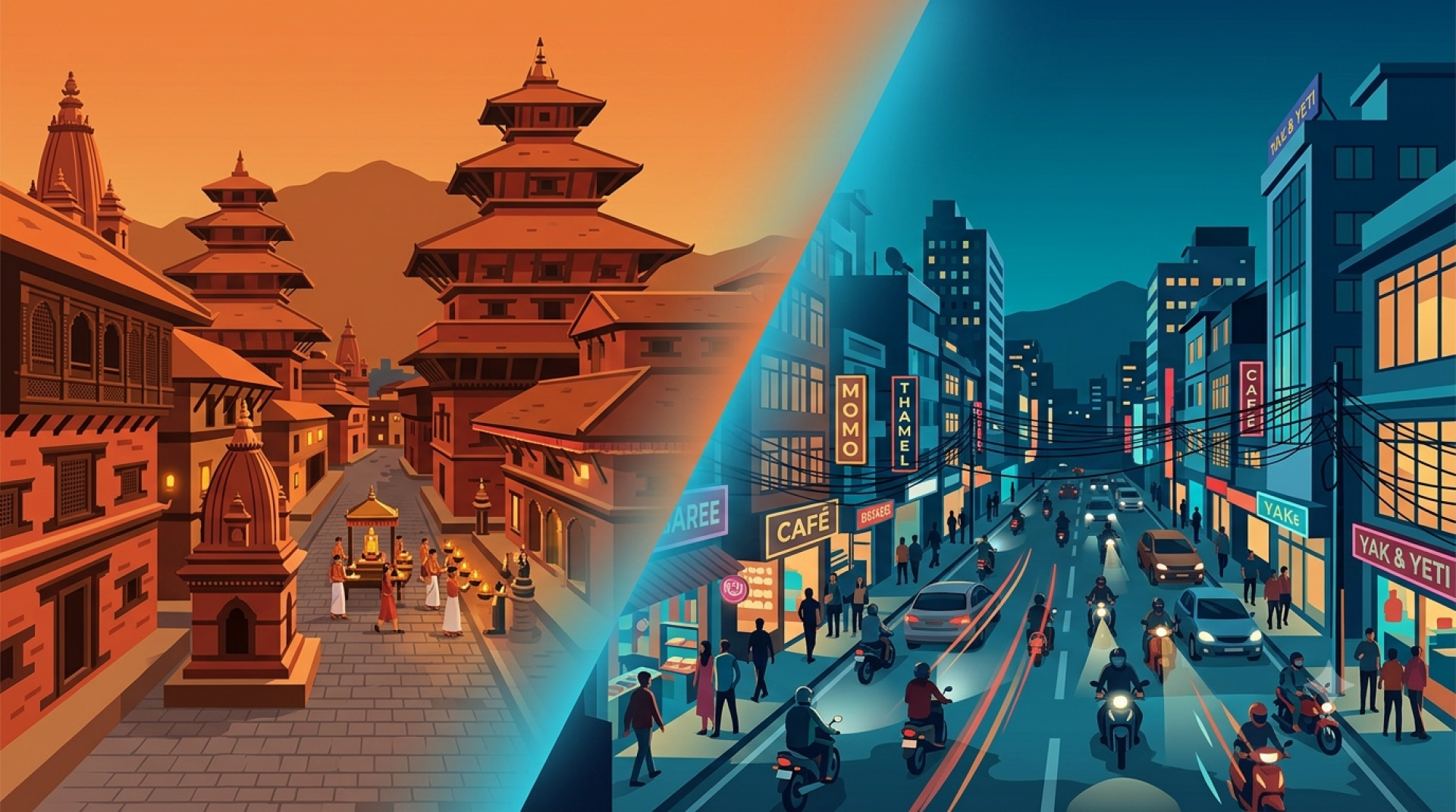
The one-line answer
If you want the full reasoning, keep scrolling — but here's the short version first.
- Best for people who want quiet, affordable, community-oriented living
- Great for students and remote workers who value peace over convenience
- Slower pace, fewer job opportunities on-site
- Best for people who need proximity to offices, clients, and networking
- More job opportunities, coworking spaces, and tech meetups
- Higher cost, more traffic, more noise and pollution
Explore each city in detail
Tap a tab to switch between Bhaktapur and Kathmandu and compare the details that actually affect daily life.
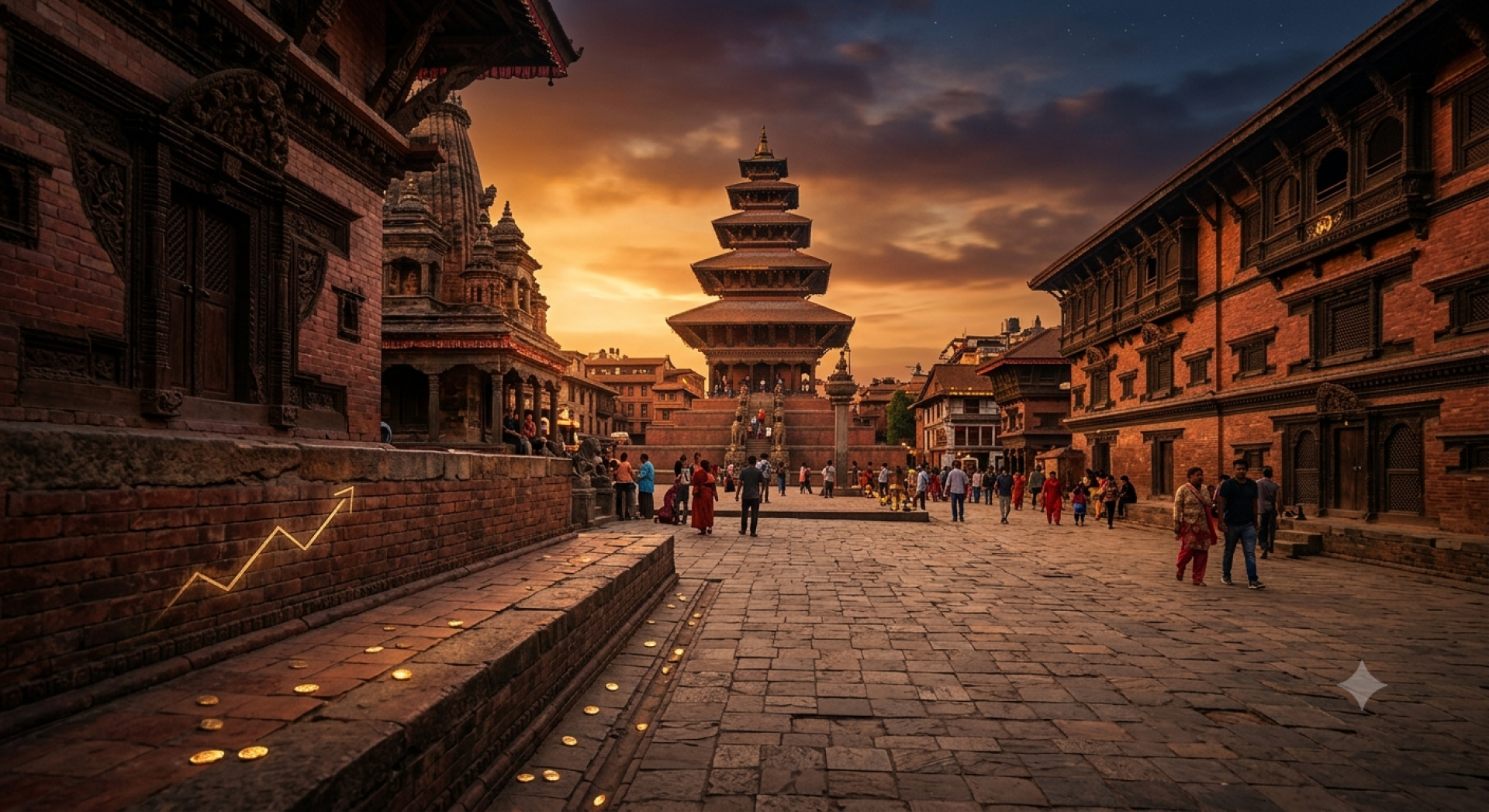
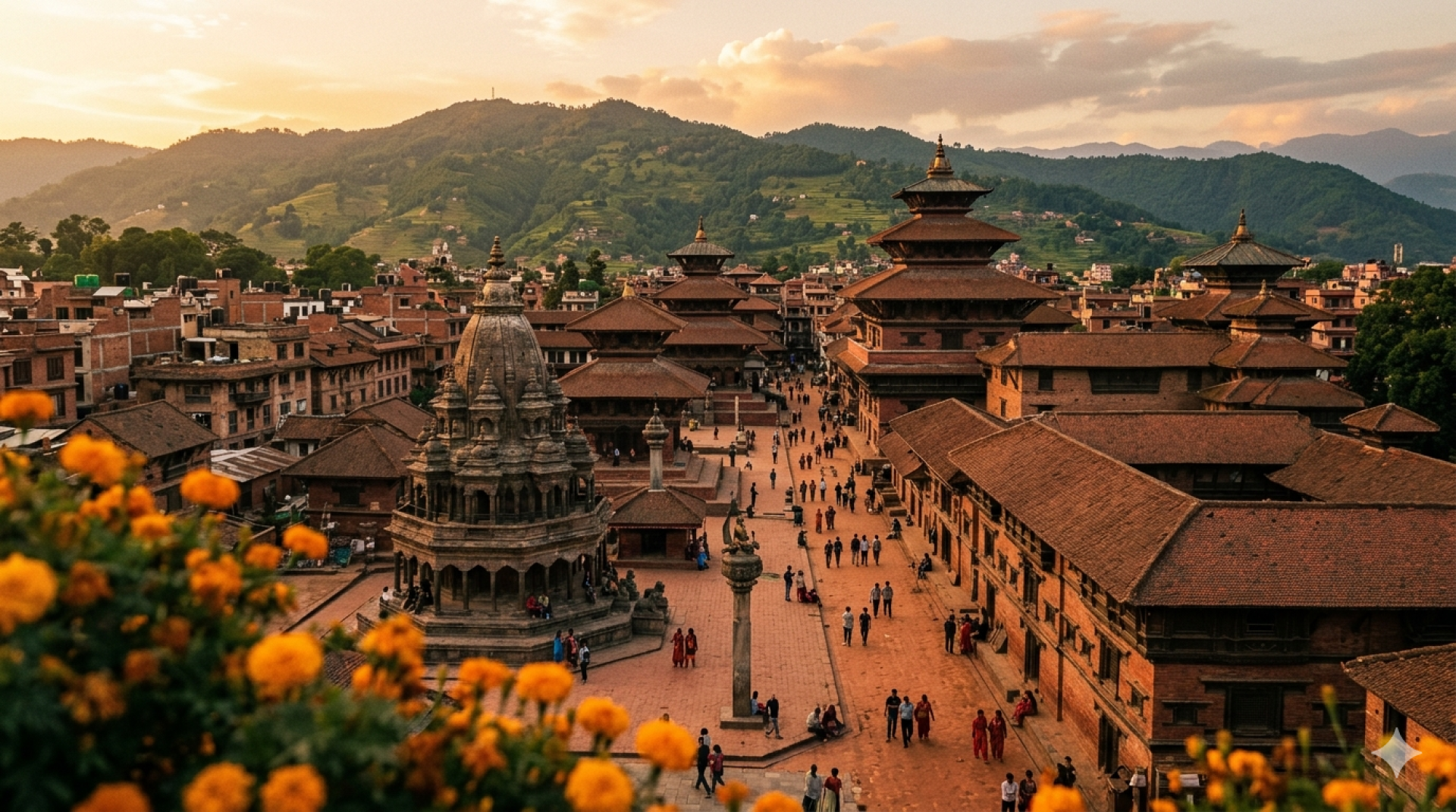
Living in Bhaktapur
Bhaktapur is a UNESCO-listed heritage city known for its preserved Newari architecture, brick-paved streets, and a noticeably slower rhythm of life compared to the capital.
- Rent: A one-bedroom apartment typically costs 30–45% less than a comparable unit in central Kathmandu.
- Commute: Local errands are mostly walkable; commuting into Kathmandu for work takes roughly 45–75 minutes depending on traffic.
- Air quality: Noticeably cleaner than Kathmandu core, especially outside the main tourist square.
- Community: Tight-knit neighborhoods, strong festival culture, and lower crime rates.
- Downside: Fewer coworking spaces, fewer corporate offices, and public transport options thin out after early evening.
Living in Kathmandu
Kathmandu is Nepal's economic and administrative center — dense, fast-moving, and packed with opportunity if you can handle the trade-offs.
- Rent: Prices vary sharply by neighborhood; areas like Baneshwor or New Road cost significantly more than outer ring areas.
- Commute: Traffic congestion is a daily reality, especially during monsoon and peak office hours (8–10 AM, 5–7 PM).
- Internet & tech scene: Most startups, IT companies, and coworking spaces are concentrated here, making networking far easier.
- Lifestyle: More restaurants, malls, gyms, and entertainment options open late into the night.
- Downside: Higher noise levels, more dust and air pollution, and higher cost of daily essentials.
The full scorecard
A category-by-category comparison based on average day-to-day experience.
| Category | Bhaktapur | Kathmandu |
|---|---|---|
| Average Rent (1BHK) | Lower | Higher |
| Traffic & Commute Time | Lighter | Heavier |
| Job & Networking Access | Limited | Stronger |
| Air Quality | Cleaner | More polluted |
| Nightlife & Entertainment | Minimal | Extensive |
| Cultural Heritage & Quiet Living | Stronger | Moderate |
| Coworking & Tech Community | Sparse | Concentrated |
"Bhaktapur gives you peace and heritage. Kathmandu gives you speed and opportunity. The right choice depends on which one your daily routine actually needs."
So, which one should you choose?
There's no universally "better" city — only a better fit for your lifestyle. If you're a student or remote developer who values affordability, cleaner air, and a slower pace, Bhaktapur is hard to beat. If your work depends on being close to clients, offices, and Nepal's growing tech ecosystem, Kathmandu's convenience will likely outweigh its chaos.
Many people end up doing what locals call the "valley commute" — living in Bhaktapur for the calm and traveling into Kathmandu for work and errands. It's not the fastest option, but for a lot of developers, it's the best of both worlds.
Still deciding where to live or work from?
Explore more real, practical guides on tech life, remote work, and living smart in Nepal — written by developers, for developers.